

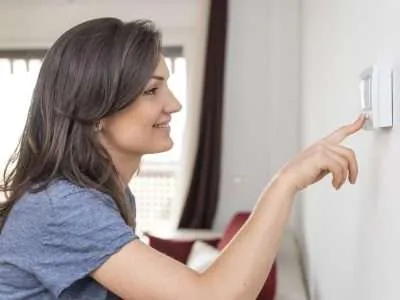
Heating and cooling make up a big part of the energy that homes and businesses use every year, so even small changes in how a system runs can make a real difference in comfort and cost. Smart thermostats have become one of the most talked-about tools for managing this balance, giving homeowners and business owners a new way to think about their indoor climate. By combining automation with real-time data, these devices can help people reduce energy use while maintaining comfortable indoor temperatures year-round.
The Evolution of Thermostats
Thermostats have come a long way from the simple manual dials that once sat on living room walls. For years, people had to turn a dial by hand every time they wanted a warmer or cooler room, and that meant a lot of guesswork and wasted energy when nobody remembered to adjust it.
Programmable thermostats arrived next, letting people set schedules in advance so the system could adjust on its own during the day. This was a helpful step forward, but it still relied on someone to plan the schedule correctly and update it whenever life got busier or slower than usual. That gap between a fixed plan and the way daily life actually unfolds is part of what pushed the technology to keep improving.
Smart thermostats took this idea even further. Instead of only following a fixed schedule, many of these devices use sensors and learning tools to notice patterns in how a space is actually used. This shift matters because a smart thermostat is not just a thermostat that connects to the internet.
Being connected is only one small part of what makes it smart. The real value comes from how the device studies daily habits and reacts in ways that make the most sense for the people living or working in that space, without anyone needing to sit down and program every detail themselves. Homeowners who once had to remember to adjust a dial before bed now find that the system quietly takes care of it on its own.
A Thermostat That Knows Your Routine
One of the more interesting features of a smart thermostat is its ability to adjust to a household’s natural rhythm. Over time, the device notices when people usually leave for work and when they tend to return home for the evening. It also begins to pick up on quieter overnight patterns that shape when a home truly needs to stay warm or cool. Based on these patterns, it can quietly lower or raise the temperature so the system is not working hard to heat or cool an empty house.
This kind of adaptive scheduling helps cut down on energy that would otherwise be spent keeping a home at a certain temperature when nobody is there to enjoy it.
Picture a typical workday. The thermostat notices that the house is empty during business hours, so it eases off until shortly before everyone is expected home, then brings the temperature back to a comfortable level right on time. The result feels almost like the system is paying attention, even though it is simply following patterns it has picked up along the way. Over several weeks, these small adjustments can add up to a noticeably smoother routine for the whole household, one that adjusts itself without anyone needing to think about it twice.
Remote Access and Smart Control
Beyond learning routines, smart thermostats also let people make changes from wherever they are. A mobile app or an online dashboard lets someone check the temperature at home while they are away, whether that means sitting at the office or spending the afternoon running errands across town. This kind of remote access removes the need to guess whether the heating or cooling was left running unnecessarily, which can bring some peace of mind before a long trip.
This feature is especially useful for people who travel often. It is just as helpful for landlords and property managers who oversee more than one building at a time. Instead of relying on someone else to check in, they can view and adjust settings from a single device no matter where they are.
Many smart thermostats also work with voice assistants, so a quick spoken request can change the temperature without anyone needing to walk over to a wall panel. For busy households, this hands-free option often becomes one of the most used features of the entire system, since it fits so easily into whatever else is already going on at home.
Energy Insights That Make Sense
Smart thermostats do more than just control temperature. Many also collect information about how energy is used throughout the home, and they present it in an easy-to-understand way. Instead of a stack of numbers, homeowners often see simple summaries that point out when energy use tends to be higher or lower. You can review these insights regularly to spot patterns that might not be obvious otherwise, such as a room that always takes longer to reach a comfortable temperature. Comparing one season against another can also show whether a recent change around the house is actually making a difference.
A homeowner might notice that certain rooms take longer to warm up than others, which could point to a need for better insulation or a closer look at how air flows through the house. Over time, this kind of information helps people make more informed choices about home upgrades. In some cases, the data might point toward zoning the home so different areas can be heated or cooled on their own schedule instead of treating the whole house the same way.
A Place Within the Smart Home
Smart thermostats rarely work alone anymore. Many are designed to connect with other smart home devices, creating a more complete approach to managing energy across the whole property. When these systems talk to each other, the results can feel more thoughtful and less like separate gadgets working on their own. A thermostat that shares information with smart lighting or a home security system can respond to the household in a more complete way than any single device could on its own. Even a connected plug or a smart appliance can play a small part in this same network over time.
Consider a home with smart blinds that close automatically when the sun is at its strongest. When the thermostat recognizes that the blinds have shut out extra heat, it can ease back on cooling since the room is naturally staying cooler. This kind of teamwork between devices is sometimes described as whole home orchestration, where every connected system plays a small part in keeping the space comfortable while avoiding unnecessary energy use.
As more devices join this kind of network, the potential for coordinated savings tends to grow, even in homes that started with just one or two smart products.
Environmental Benefits and Sustainability
Using less energy at home does more than lower a monthly bill. It also means less strain on the resources needed to generate that energy in the first place. Because smart thermostats help avoid heating or cooling a space that does not need it, they can play a meaningful role in reducing a household’s overall environmental impact.
When many homes in a community make this kind of change, the combined effect on local energy demand can add up in a meaningful way.
This fits into a larger picture of environmentally conscious living that many homeowners are interested in today. Some businesses even pursue green building certifications, which often consider energy-efficient equipment like smart thermostats. For those looking to make their home or property more sustainable, a smart thermostat can be one piece of a broader set of upgrades. Some homeowners pair it with better insulation, while others focus on upgraded windows as part of the same project.
Whatever the combination, the goal is usually the same: getting more comfort with less energy.
Cost Savings and Return on Investment
For most people, cost is one of the biggest reasons to consider a smart thermostat. Because these devices reduce unnecessary heating and cooling, many homeowners notice a real difference in their utility bills after switching. While savings vary by home and climate, smart thermostats can help households use energy more efficiently over time.
Many homeowners find that the money saved on monthly bills eventually covers the original cost of the device itself, and after that point, the ongoing savings continue to add up. This is often described as a fairly quick return on investment compared with other home upgrades.
When a smart thermostat is paired with a well-maintained heating and cooling system kept in shape through routine HVAC service, the long-term value tends to be even stronger, since the two work together to keep the home comfortable without wasting energy. This is one reason many people consider a smart thermostat when making larger updates to their heating and cooling systems.
Things to Think About Before You Upgrade
Like any home improvement, a smart thermostat is worth thinking through carefully before buying one. There is an upfront cost involved, and some homes may need a bit of extra work to get everything set up properly, especially if the existing wiring or system is older.
Compatibility with certain HVAC setups can also vary, so it helps to check ahead of time whether a particular thermostat will work well with the equipment already in place. Setting everything up correctly can take a bit of extra time at first, though most homeowners find the process only needs to happen once.
Some people also have questions about privacy, since these devices collect information about daily routines and energy use. It is worth taking time to read through how a manufacturer handles this data before deciding on a product.
To get the most out of a smart thermostat, working with a qualified HVAC company for the setup can make a real difference, since proper installation helps the device read the home accurately and perform as designed.
The Future of Smart HVAC Technology
Looking ahead, smart thermostats are expected to become even more capable. Some newer systems are beginning to use predictive tools that look at outdoor weather patterns and daily habits together, aiming to adjust the indoor climate before a change is even needed. This kind of forward-thinking approach could make homes feel more comfortable without requiring any extra effort from the people living there.
There is also growing interest in connecting smart thermostats to renewable energy sources, such as solar panels and geothermal systems, to help homes manage energy use more efficiently. Some utility companies have begun exploring partnerships with smart thermostat programs, encouraging households to shift their energy use to times when demand is lower.
This kind of planning can also matter for anyone considering a new AC installation, since pairing newer equipment with a smart thermostat from the start tends to offer the smoothest results. As these technologies continue to develop, smart thermostats are likely to remain at the center of how homes manage comfort and efficiency for years to come.
Conclusion
Smart thermostats combine convenience and efficiency in a way that makes home comfort easier to manage. By learning daily routines and offering easy remote control, they give homeowners a simple upgrade with a lasting impact on comfort and long-term savings.
Reach out to our team today to learn more about finding the right smart thermostat solution for your home.
Do smart thermostats work with every type of heating and cooling system?
Most modern systems are compatible, though older or more unusual setups may need an extra step during installation.
How long does it typically take to notice a difference after installing one?
Many homeowners start to see changes in their comfort and energy habits within the first few weeks, as the thermostat begins learning the household routine. Some notice it happening even sooner, especially if their daily schedule stays fairly consistent.
Can a smart thermostat be used in a business or rental property?
Yes. Many property owners and managers use these devices to monitor and adjust settings remotely across more than one location.
Is professional installation really necessary?
While some homeowners choose to install a smart thermostat on their own, having it set up by someone experienced with home heating and cooling systems helps ensure everything is wired correctly and calibrated to work well together, especially in homes with more complex wiring.
Will a smart thermostat still work if the internet goes down?
Most smart thermostats continue to operate using their built-in schedule even without an internet connection. Remote access and a few advanced features may be temporarily unavailable until the connection returns, but the basic day-to-day comfort settings usually keep running just fine.